



It is a certain type of wealth, which does not appear on any Forbes list. Ratan Tata, the man who quietly led one of the biggest business empires in India, only made it to the 350 th spot at the Hurun India Rich List 2024 with an estimated personal net worth of approximately Rs 7,900 crore (approximately a $940 million). Even that, truthful as it is, lacks the point. Ratan Tata had already donated most of his wealth.
He died on 9 October 2024, aged 86. And in the days that followed tributes came in at every end of the world, not so much of the magnitude of his fortune, as of what he made of it. He gave away his wealth, which amounted to about Rs 10,000 crore (about 1.2 billion dollars), to charitable trusts, his family, and his long-time employees. Some entity gave the Ratan Tata Endowment Foundation shares valued at approximately 3800 crore. It was Ratan Tata-like in most aspects.
So who was this man? And what has made ratan tata net worth talk so distinguishingly convincing–and so interesting?
| Category | Details |
| Full Name | Ratan Naval Tata |
| Date of Birth | 28 December 1937 |
| Place of Birth | Mumbai |
| Date of Death | 9 October 2024 |
| Age at Death | 86 Years |
| Nationality | Indian |
| Profession | Entrepreneur, Industrialist, and Investor |
| Known For | Former Chairman of Tata Group and Tata Sons |
| Estimated Net Worth (2024) | ₹7,900 Crore (~$940 Million) |
| Total Wealth Distributed | Around ₹10,000 Crore through will and trusts |
| Major Ownership Structure | Majority of Tata Sons owned by charitable Tata Trusts |
| Education | Cornell University (Architecture), Harvard Business School (AMP) |
| Chairman of Tata Group | 1991 – 2012 |
| Famous Product Launch | Tata Nano (2009) |
| Awards | Padma Bhushan (2000), Padma Vibhushan (2008) |
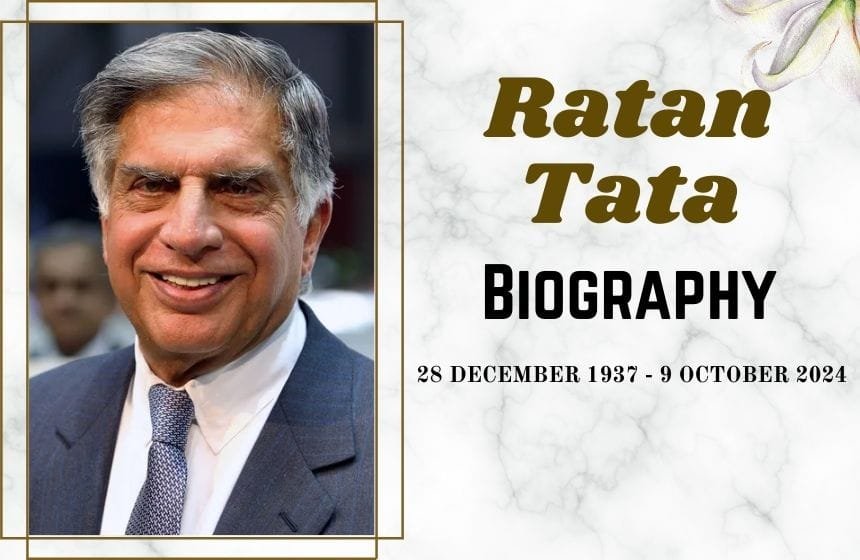
Early Life
Ratan Naval Tata was born on 28 December 1937, in Bombay, which became Mumbai, in the Parsi business family, which had already developed the modern India during more than a century. His father was Naval Tata, his mother Sooni Tata, and his great-great-grandfather was the very man Jamsetji Tata who founded the Tata Group.
However, the life of Ratan did not start with the image of a privileged life. His parents parted in 1948 when he was only ten years old. His grandmother, Navajbai Tata, then brought him up, an experience that by all accounts, gave him a very strong sense of responsibility, restraint and compassion. Such attributes would become his leadership characteristics several decades later.
In Mumbai, he went to Cathedral school and John Connon school before proceeding to the United States of America to study higher education. He attended the Riverdale Country School in New York and got into Cornell University where he graduated in 1962 with a Bachelor of Architecture with Structural Engineering degree. In 1975, he graduated through the Harvard Business School with the Advanced Management Program. It is a very odd educational journey to become the leader of one of the largest industrial conglomerates in India, but that combination of design thinking and business savvy is likely not a coincidence.
Career Highlights
1962: Starting on the Shop Floor.
In the year 1962, Ratan Tata did not enter into the Tata Group as an employee and immediately get into a corner office. He began at the shop floor of Tata Steel in Jamshedpur – shovelling limestone and working on the blast furnace with the others. It was a conscious decision, and it was a decision that formed the way he would treat employees in the rest of his life.
1991: Taking the Helm
Ratan replaced a legendary JRD Tata as Chairman of Tata Sons in 1991. This change was not completely smooth. A number of business executives in the group opposed the change. But Ratan did it systematically, modernisation of operations, retirement of underperforming business, and laying the groundwork to an era of unprecedented global expansion.
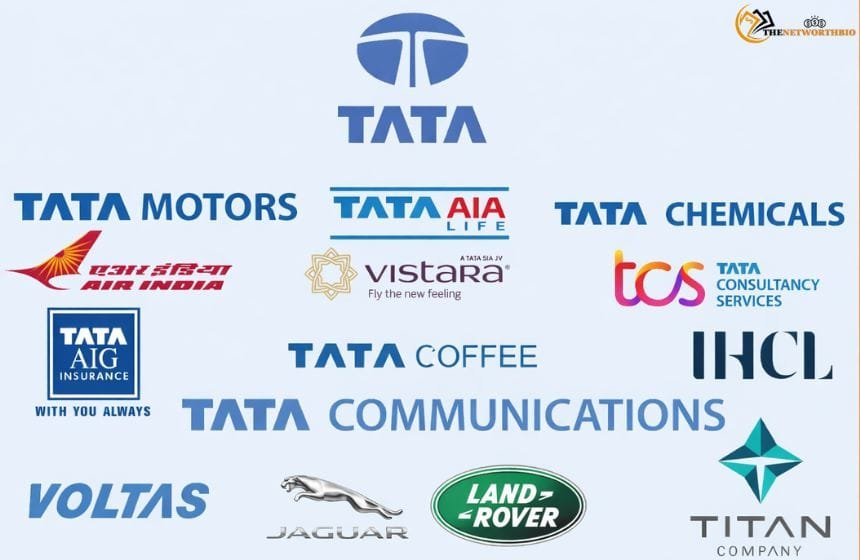
What had occurred in the next two decades was impressive. During his reign, the revenue of Tata Group increased over 40 times. The company grew into more than 100 countries establishing a presence in steel to software, automobiles to aviation, hospitality to telecommunications.
2000: The Tetley Acquisition
One of the earliest cross-border acquisitions Tata Tea made was the acquisition of Tetley at a cost of 432 million dollars. This was seen by many analysts as an excessive move. They were wrong.
2007: Corus Steel
Tata steel used to acquire Anglo-Dutch steel company, Corus, at a cost of $12.9 billion which at the time was the biggest overseas takeover by an Indian company. It gave a strong message that the Indian conglomerates were capable of competing at the global stage.
2008: Jaguar Land Rover
Probably Ratan made the boldest step in 2008, when he bought the Jaguar and Land Rover brands owned by Ford at the price of 2.3 billion. With the global financial crisis coming right on the heels of the deal, it struck almost directly. Sceptics were before their time. Tata Motors instead transformed JLR into a lucrative, high-end brand that brought in a huge portion of the global Tata Motors revenue many years later.
| Year | Details |
| 1962 | Started Career at Tata Steel |
| 1991 | Became Chairman of Tata Sons |
| 1991–2012 | Global Expansion of Tata Group |
| 2000 | Acquisition of Tetley |
| 2007 | Acquisition of Corus Group |
| 2008 | Acquisition of Jaguar Land Rover |
The Tata Nano
In 2009, Ratan introduced the Tata Nano – which he priced at 1 lakh, but it competed as the lowest priced car in the world. The motive behind it was real; to provide Indian families with a safer choice of riding motorcycles regardless of the weather. The vehicle had quality issues and an image issue that Tata was not able to fix to the full extent, yet, the purpose behind the car was typical Ratan Tata, who relied on business to fix a problem that would help a real person.
He held the position of Chairman until 2012, when he was reinstated, briefly, as interim Chairman between October 2016 and February 2017 in the aftermath of a disastrous boardroom coup led by Cyrus Mistry. All of them did it with a name that most of the executives can only dream of, ethical, level-headed, and a true gentleman.
Ratan Tata Net Worth
The thing about ratan tata net worth that would astonish most people is this: he was not a billionaire in the conventional meaning of the term not because he did not have access to such a large amount of money; he simply did not hold onto it.
His personal net worth at the time of death was estimated to be 7,900 crore (around 940 million USD) according to the Hurun India Rich List 2024. Other sources, such as Celebrity Net Worth, accuse the figure to be nearer to half a billion USD. The difference is due to the fact that there is a variation among analysts in the equivalence of his stake in Tata Sons and charitable trusts.
The most important fact: The different Tata Trusts approximately own Tata Sons, the holding company of the whole Tata Group empire. These are not personal wealth but charitable organisations. This is the reason why Ratan Tata never featured in the Forbes Billionaires list with colleagues of the same caliber operating companies of the same size. He had structured the ownership to direct most of the earnings of the empire into philanthropy instead of his own accounts.
He had a direct personal interest in Tata Sons of only 0.83% directly. His other personal wealth stakes were that holding, investment in startups such as Lenskart, Paytm, Ola Electric, CarDekho, Urban Company, CashKaro, and BlueStone, over 40 ventures in total, and dividends paid by Tata group companies such as Titan and Tata Steel.
His will, published posthumously, gave away approximately Rs 10,000 crore to family (including brother Jimmy Tata and half-sisters Shireen and Deanna Jejeebhoy), faithful employees and Ratan Tata Endowment Foundation. One part passed on to Mohini Mohan Dutta, a personal friend and who was given one-third of the remaining property.
| Year | Estimated Net Worth (₹) | Estimated Net Worth (USD) |
| 2020 | ₹3,500–4,000 Crore | ~$450–500 Million |
| 2021 | ₹5,000 Crore | ~$650 Million |
| 2022 | ₹6,800 Crore | ~$820 Million |
| 2023 | ₹7,600 Crore | ~$910 Million |
| 2024 | ₹7,900 Crore | ~$940 Million |
Accomplishments and Awards.
The awards are great, yet they hardly represent the impact that Ratan Tata had on the Indian public life.
- Padma Bhushan (2000): The third-highest civilian blessedness in India, given to him due to his work in the industry and industry.
- Padma Vibhushan (2008): The second-highest civilian award given by the country, and a rare honour to have been conferred on him making him very select company.
- Cornell University recognised his work in education and nutrition research especially with the Tata-Cornell Institute of Agriculture and Nutrition. He was also a member of the board of Bill and Melinda Gates Foundation India AIDS initiative – an indicator of his eminence in the world philanthropy arena.
- The Tata Trusts had financed 10 cancer care centers in Karnataka, Andhra Pradesh, Jharkand, and Assam – cancer treatment could now be offered to patients who could not afford it otherwise. That is what sort of a legacy does not go down well in a net worth computation.
| Year | Recognition / Initiative | Details |
| 2000 | Padma Bhushan | Ratan Tata received India’s third-highest civilian award |
| 2008 | Padma Vibhushan | He was honoured with India’s second-highest civilian award |
Personal Life: A Private Man in a Very Public World.
Ratan Tata never married and never had a child. In a few interviews, he was very frank about almost getting matrimonially engaged a few times, once in his early years in the United States, but something always came up.
He was famously private and rarely associated with the elite social circuits expected of someone of his stature. Despite his immense success, he personally responded to emails, sometimes even late at night. A passionate animal lover, he also advocated for animal welfare; in June 2024, just months before his death, he posted on Instagram appealing for blood donors to help save a dying stray dog at his animal hospital in Mumbai.
He resided in a three-story sea-facing apartment in Colaba, Mumbai – a modest dwelling according to the culture of Indian tycoons. He was an approved pilot and owned his own Dassault Falcon personal jet that had cost about 30 million dollars. It is among the few actual indulgences in history.
Battles on one side: The Cyrus Mistry Fallout.
The most acute wrangle of the later years of Ratan Tata involved him in October 2016, when the board suddenly ousted Cyrus Mistry, who had succeeded him as Chairman of Tata Sons. Mistry made public allegations that Ratan Tata intermedled with his management and that the board was not behaving as it should.
The case was years in the Indian courts. Mistry appealed to the National Company Law Tribunal on the issue of his removal and, at first, he won. Tata Sons was attractive and the Supreme Court of India ended up supporting the removal in 2021. Ratan Tata insisted that it has been done in the interest of the group. Whither the in-story part, the episode made the otherwise polished image of a man who had spent decades being hailed as an example of ethical corporate leadership a complicated one.
He wasn’t perfect. The manner in which the Tata Group managed to sail through that crisis, however, came out almost unscathed, and functioning well, says something about the institutional structures that he had put in place over decades.
A Tata Legacy: What Ratan Tata Left Behind.
- Following the 2008 terror attacks at the Taj Mahal Palace Hotel in Mumbai—one of the Taj Group’s most iconic properties—Ratan Tata personally met the families of the employees and guests who lost their lives. After the operation ended, he stayed outside the besieged hotel for three days instead of leaving. Then he reconstructed the hotel and created financial aid to all the affected families.
- It is that story, more than any balance sheet, which India recalled when Ratan Tata died.
- Noel Tata, his half-brother, has since increased his participation in the Tata Trusts by becoming a trustee in the Sir Ratan Tata Trust and Sir Dorabji Tata Trust. The current revenue of the Tata Group is more than 165 billion USD, and it is one of the largest conglomerates on the planet. The empire Ratan created, and to a great extent gave to charity, is quite alive.
- His fingerprint is also in the startup ecosystem in India. He personally made investments in more than 40 companies – a mentor, not a financier, he picked up the phone and asked tough questions and supported entrepreneurs that other firms did not.
Conclusion
The net worth of Ratan Tata remained a strange topic in itself not due to the fact that the figure was limited but because it was so purposely. Instead of taking the money straight to his wallet, he continued to direct the wealth to hospitals, schools, cancer centres and trusts. Ratan Tata was a contrast to the business culture that constantly exalts billionaires over the size of the pile as the real measure of success.
The value he left behind is more difficult to calculate than any net worth number. The impact of his legacy shows itself in many areas. It is visible in the communities developed with the support of Tata Steel. It is also reflected in the cancer patients treated through his charitable trusts and the founders he believed in long before anyone else did and it is in the example he led by — an example of business leadership that did not ignore ethics even in its inconvenience.
The Tata Group is a place to begin, in trying to understand the modern business scene in India and to know about the Tata Group, then you begin with Ratan Tata. No one can easily put his life in a net worth analysis and that, frankly speaking, is the point.
Frequently Asked Questions
Experts estimate that Ratan Tata had a personal net worth of approximately Rs 7,900 crore (approximately 940 million USD in American dollars)
The Tata Trusts own approximately 66 percent of Tata Sons, the holding company of the Tata Group, which are charities. Ratan Tata did not include that wealth as personal net worth
Ratan Tata allocated his wealth of about Rs 10,000 crore of Ratan Tata to family members (brother Jimmy Tata and half-sisters Shireen and Deanna Jejeebhoy).
Tetley Tea (432 million, 2000), Corus Steel (12.9 billion, 2007), and Ford sold Ferdinand Porsche (2.3 billion, 2008).
Yes, Ratan Tata himself funded over 40 Indian startups, such as Lenskart, Paytm, Ola Electric, CarDekho, CashKaro, BlueStone, Urban Company and Urban Ladder.
Read More:
José Darey Castro: Age, Networth, Career, Education and More
Fani Willis Net Worth – Age, Education, Family, Career Journey, Husband